

Flood recovery is a race against time from the moment the water pulls back. Mold can start growing within 24 to 48 hours. Structural materials that look fine may already be compromised beneath the surface. Insurance claims have deadlines. Local assistance programs fill up fast. The window to pause and process is, sadly, also the window when the decisions you make - or delay - carry consequences.
That's not meant to add to the stress - it's meant to do the opposite. Because knowing the right order of steps to take can turn the chaos into something you move through. This guide is written for Washington State residents who are either in the immediate aftermath of a flood or who want to be prepared before the next one arrives. It's helpful, it's specific to this state, and it's built around what actually matters in those first critical days.
What follows covers how to safely re-enter your property, who to contact first, how to document damage, what Washington resources are available to you, and how to protect yourself from the health and financial dangers that come with flood recovery. Take it one step at a time.
Key Takeaways
- Wait for official local authority clearance before re-entering, and check for structural damage, gas leaks, and electrical hazards first.
- Document all flood damage with video, photos, and a written inventory before moving or discarding anything.
- Mold can grow within 24-48 hours, so remove water quickly and wear proper protective gear during cleanup.
- Washington residents can access FEMA assistance, the Washington Homeownership Hotline, and DSHS food benefit replacement after a flood.
- After recovery, check flood zone maps, consider flood insurance, and prepare a 72-hour emergency kit for future disasters.
How to Know When It's Safe to Re-Enter Your Home After a Flood
Floodwater that looks still and shallow can still be dangerous. The Washington State Department of Health notes that just 6 inches of moving water is enough to knock a person off their feet. Even after the water level drops, what's left behind can be contaminated with sewage, chemicals, and other hazards you can't always see.
Local authorities decide when it's safe to go back inside. Your county or city emergency management office will issue an official all-clear when residents are allowed to re-enter. Do not go back to your home until you have that clearance, even if the water has receded and your street looks passable.
What to Check Before You Step Inside
Once you have official permission to return, take a slow walk around the outside of your home before opening the door. Look for visible structural damage like a shifted foundation, cracks in the walls, or a roof that's sagging. If the structure looks compromised in any way, stop and contact a licensed inspector before going in.

A gas smell is a reason to leave immediately and call your gas company from a safe distance. Do not use a lighter or switch on any lights to investigate. Gas leaks after a flood are a serious hazard, and the source is not necessarily obvious.
Electrical hazards are another concern. If there's any chance the electrical panel or outlets were submerged, don't switch anything on. Contact your utility provider to disconnect power before you enter. Washington state utility companies like Puget Sound Energy have protocols for flood-affected homes, so it's worth calling them.
A Quick Reference for Re-Entry
| What to Check | What to Do If There's a Problem |
|---|---|
| Official clearance | Wait for local authorities to give the all-clear |
| Structural damage | Contact a licensed inspector before entering |
| Gas smell | Leave and call your gas company immediately |
| Electrical exposure | Call your utility provider to disconnect power first |
Caution here is not excessive - it's what makes sure the steps you take next are ones you take safely.
Documenting Flood Damage Before You Touch Anything

The second you step inside, resist the urge to start moving things or throwing anything away. Documentation has to come first - your insurance claim and any FEMA assistance you apply for will depend heavily on the evidence you collect right.
Start with your phone and record a video walkthrough of every room. Walk slowly and narrate what you see, pointing out waterlines on the walls, damaged furniture, ruined flooring, and anything that looks structurally wrong. Video is especially helpful because it captures depth and context that photos alone can miss.
Then go back through and take still photos from multiple angles. Get close-up shots of personal items and wide shots that show the full scope of each room. Don't forget less obvious areas like inside cabinets, closets, and the garage.
Write It Down Too
A written inventory list works alongside your photos and video to build a picture of what was lost or damaged. Go room by room and list items with as much detail as you can - the type of item, approximate age, and estimated value. If you still have receipts or can find purchase records online, save those too.
Keep damaged items where they are for now. Throwing things out before an adjuster has seen them can hurt your claim. Even items that seem like obvious trash are worth keeping until you have confirmation that your documentation is enough.
Watch Out for Helpful Visitors
Well-meaning family members or neighbors may show up wanting to help clean up and haul things out. That instinct comes from a good place. But it can create problems for your claim. Make sure anyone who comes to help knows that nothing moves until you have finished documenting.
It's helpful to have one person in charge of documentation so it doesn't get skipped in the chaos. Put them on it before anyone else starts on anything else. A little coordination here saves problems later when you're filing paperwork.
Once your photos, video, and written list are saved somewhere safe - like a cloud backup or an email to yourself - you'll have what you need to move forward with the next step: getting the house cleaned up.
Cleaning Up Safely and Stopping Mold Before It Starts
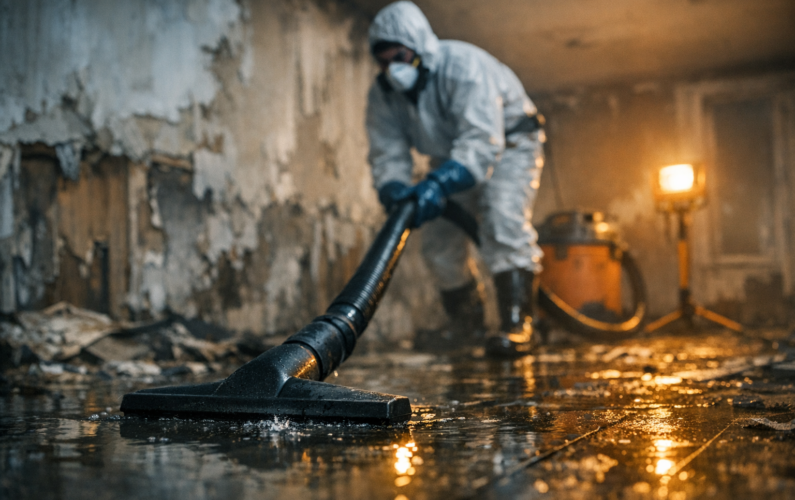
Once your documentation is done, the clock is already ticking. King County warns that mold can start to grow within 24 to 48 hours of flood exposure, so getting water out fast is one of the most important things you can do right.
Before you touch anything, get the right gear on. King County calls for an N95 mask, waterproof gloves, protective goggles, and full-coverage clothing. Floodwater carries bacteria, sewage, and chemicals, so this is not a step to skip in the name of saving time.
Removing Water and Drying Things Out
Use a wet-dry vacuum, pump, or mop to pull standing water out as fast as possible. Open windows and doors to get air moving through the space, and run fans or a dehumidifier if you have access to power. You want to get affected areas dry within 24 to 48 hours to cut off mold before it takes hold.
Hard surfaces like sealed concrete or metal can usually be cleaned and dried successfully. The harder call is with porous materials, because those absorb contaminated water deep into their structure and can't always be made safe again.
What You Can Save and What You Probably Can't
The table below gives you a general sense of what flood-damaged materials can usually be salvaged and what usually needs to go. A water damage restoration professional can help you make those calls with more certainty.
| Material | Generally Salvageable | Notes |
|---|---|---|
| Hardwood floors | Sometimes | Depends on how long they were wet and how much they warped |
| Drywall | Rarely | Absorbs contaminated water and is difficult to fully dry |
| Carpet and padding | No | Almost always needs full removal and disposal |
| Solid wood furniture | Sometimes | Can be dried and treated if caught early enough |
| Sealed concrete | Yes | Clean, disinfect, and dry thoroughly |
| Insulation | No | Holds moisture and is a fast source of mold growth |
When in doubt, removal is the safer call. Holding onto a material that's harboring mold will create a much bigger problem than replacing it.
Filing for State and Federal Assistance After a Washington Flood
Once your home is stable and documented, the next step is to start pulling in the financial help you could be entitled to. Washington residents affected by a federally declared disaster can apply for FEMA help through a few different channels. You can go to DisasterAssistance.gov, you can use the FEMA app on your phone, or call 1-800-621-3362 to talk to someone.
Apply as soon as you can. FEMA assistance has deadlines, and waiting too long can close the door on money that could cover temporary housing, home repairs, and other costs.

Washington State also has its own resources to help you get back on your feet. If you are a homeowner struggling with mortgage or housing questions after a flood, the Washington Homeownership Hotline at 877-894-4663 connects you with free housing counselors. If you lost food in the disaster, DSHS may be able to replace your food benefits - call 877-501-2233 to find out if you qualify.
For local governments and nonprofits, FEMA's Public Assistance Program can reimburse up to 75% of the cost to repair public infrastructure damaged in the flood. If your community was affected, your local emergency management office will be the one to pursue this on your behalf.
| Aid Type | Who Can Apply | How to Apply |
|---|---|---|
| FEMA Individual Assistance | Homeowners and renters in a federally declared disaster area | DisasterAssistance.gov, FEMA app, or 1-800-621-3362 |
| FEMA Public Assistance (up to 75% reimbursement) | Local governments and eligible nonprofits | Through your local emergency management office |
| Washington Homeownership Hotline | Washington homeowners with housing or mortgage questions | Call 877-894-4663 |
| DSHS Food Benefit Replacement | Washington residents who lost food in the disaster | Call 877-501-2233 |
Keep copies of everything you submit and write down the names of anyone you talk to. A paper trail makes it much easier to follow up if your application gets delayed or you need to appeal a decision.
What Comes Next - and How to Be Better Prepared for Next Time

When the dust settles, take what you've learned and channel it into preparedness. Look up your flood zone on Washington State's hazard maps, consider adding flood insurance to your policy if you don't already have it, and build out an emergency kit stocked with at least 72 hours of essentials. A little planning now can mean a faster, less devastating recovery if floodwaters return.
Disaster strikes without warning. But recovery starts with one call. The right restoration team makes the difference when your home has suffered water intrusion, storm damage, mold growth, or something more extreme. Blaze Restoration can help Washington residents rebuild - and with financing available and a free estimate to get you started, there's no reason to wait. Serving WA, CA, OR, and ID, their team is equipped to restore what matters to you the most. Call 800-464-1142 and take the first step toward getting your home - and your life - back.
FAQs
When is it safe to re-enter my home after flooding?
Wait for official clearance from local authorities before re-entering. Even after water recedes, hazards like gas leaks, electrical dangers, and structural damage may still be present.
How quickly can mold grow after a flood?
Mold can begin growing within 24 to 48 hours of flood exposure. Removing water quickly and drying affected areas fast is critical to preventing mold from taking hold.
What Washington State assistance is available after flooding?
Washington residents can access FEMA Individual Assistance, the Washington Homeownership Hotline (877-894-4663), and DSHS food benefit replacement by calling 877-501-2233.
Why must I document damage before cleaning up?
Insurance claims and FEMA assistance rely heavily on evidence. Photograph, video, and inventory all damage before moving or discarding anything to protect your claim.
Which flood-damaged materials usually cannot be salvaged?
Carpet, padding, and insulation almost always require full removal. Drywall rarely survives flood damage and should typically be replaced due to contaminated water absorption.